

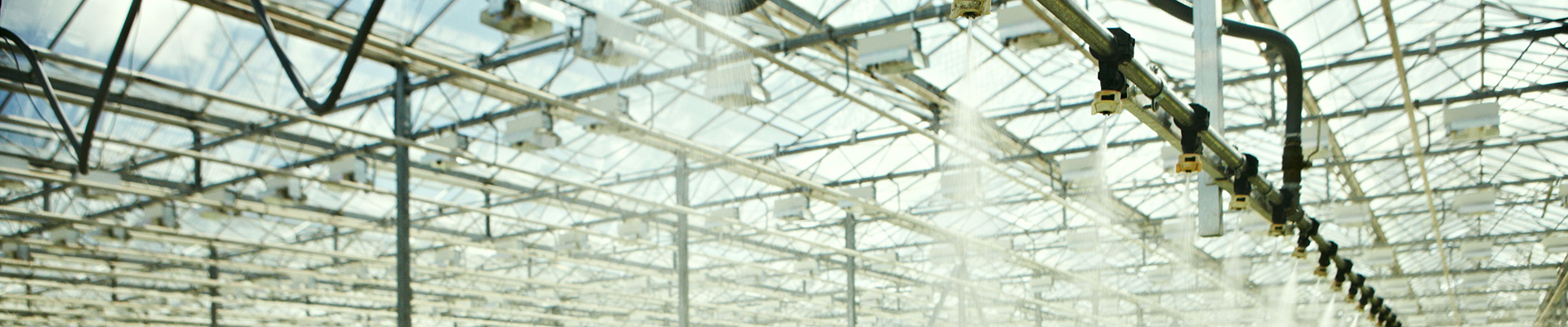


The meaning of using different lighting fixtures inside a greenhouse
Everyone knows that sunlight is essential for growth, so what types of supplemental lighting are needed for greenhouse cultivation?
Greenhouses typically require six hours of direct or full-spectrum light daily. If this cannot be achieved naturally, supplemental lighting must be added. Supplemental lighting uses various high-intensity artificial lights to promote crop growth and yield. Amateur growers like to use them to maintain growth and extend the growing season, while commercial growers prefer them to increase yields and profits.
Equally important as supplemental lighting is photoperiod control lighting. Photoperiod refers to the number of hours a plant receives light in a 24-hour period. For example, if the sun rises at 6 am and sets at 8 pm, a 14-hour photoperiod has passed. Photoperiod control lights are used to simulate long days, triggering early flowering or promoting delayed flowering depending on the plant's needs.
Growers have a variety of lighting options to choose from, so understanding the nuances of different lighting styles is crucial. Let's examine the uses and benefits of four different types of lighting.
High-Pressure Sodium Lamps
High-pressure sodium lamps provide more orange and red light in the spectrum and have a golden-white appearance to the human eye. Because they promote germination and flowering, they are typically used later in the plant's growth cycle. These fixtures are about seven times more efficient than incandescent bulbs and work best when used with natural light, making them ideal for greenhouses. High-pressure sodium lamps can also increase intensity and photosynthetically active radiation (PAR) by up to 10%.
Heating a high-pressure sodium lamp takes about 4 to 5 minutes, followed by cooling for about 1 minute. Therefore, they are not suitable for locations where the lamp is frequently turned on and off. Location is also important; high-pressure sodium lamps should be installed 70 to 90 cm above the fixture for best results.
LED Lighting Fixtures
LED (Light Emitting Diode) lighting fixtures are the longest-lasting option, with a typical lifespan of 50,000 hours. The diodes in an LED do not burn out as quickly as standard bulbs, resulting in a very long lifespan. LED lighting fixtures are more efficient than standard lighting fixtures because more power input is used for illumination rather than heat. For example, incandescent bulbs are only about 20% efficient because most of their input power is used to generate heat.
One of the biggest advantages of LED lighting is its significant energy savings. They can be easily integrated into any operation, saving up to 70% compared to high-intensity discharge (HID) lighting. LED lights require no warm-up time and are mercury-free, making them easier to handle than other bulbs. When used as the sole light source, LEDs offer outstanding performance, making them an attractive option for many growers.
Ceramic Metal Halide Lamps
Ceramic metal halide lamps emit blue light, although they appear bright white to the human eye. They can easily be used as a primary light source, with an average lifespan between 8,000 and 15,000 hours. Because metal halides are 3 to 5 times more efficient than incandescent bulbs, they are an excellent choice for areas that do not receive natural sunlight.
An important point to note is that metal halides must emit light for about 5 minutes or less to fully glow. They also require a cooling-off period of about 5 to 10 minutes before restarting. Therefore, they are not recommended for use in locations where the lights are frequently turned on and off.
Ceramic metal halide lamps should be suspended 70 to 90 cm above plants and may result in darkened leaves and overall healthy green plants. Grower-supplied ceramic metal halide lamps are ideal for greenhouse and hydroponic applications. Growers typically use them early in the plant's life when seeds are in the vegetative growth stage. Dimmable ballasts allow growers to achieve perfect lighting. They are also completely silent, so there is no annoying hum, buzzing, or high-pitched sound.
T5 Lamps
T5 lamps are the most efficient and popular fluorescent greenhouse lighting equipment used for growth. They use less energy than conventional lamps and can last up to 50,000 hours. These eco-friendly lamps are sometimes equipped with aluminum reflectors for maximum efficiency. They are ideal for use in hydroponics, greenhouses, warehouses, barns, and more. They can be used from the initial seed stage to long-term growth. The letter "T" indicates the tube shape of the lamp, and the number 5 indicates its diameter, measured in eighth-inch units. T5 lamps are slim, with a diameter of only 5/8 inch, making T5 fluorescent tubes more efficient than standard fluorescent tubes.
High-performance T5 fluorescent lamps have extremely high lumen output and full-spectrum illumination, making them ideal for plants from seedling stage to long-term growth. Their minimal heat output means they can be safely placed very close to plants. Although technically not much light, it is important not to use too much light in small spaces, as this can cause overheating of the leaf surface area.
With so many greenhouse lighting options tailored to different plant types and growth stages, it's easy to understand why growers everywhere value expert guidance so highly. Growers can use custom lighting plans, automated and computer-controlled lighting, or even consult greenhouse experts specializing in lighting design. From supplemental growth to photoperiod control, a wide range of lighting solutions makes optimizing growing space a simple and effective process.
