

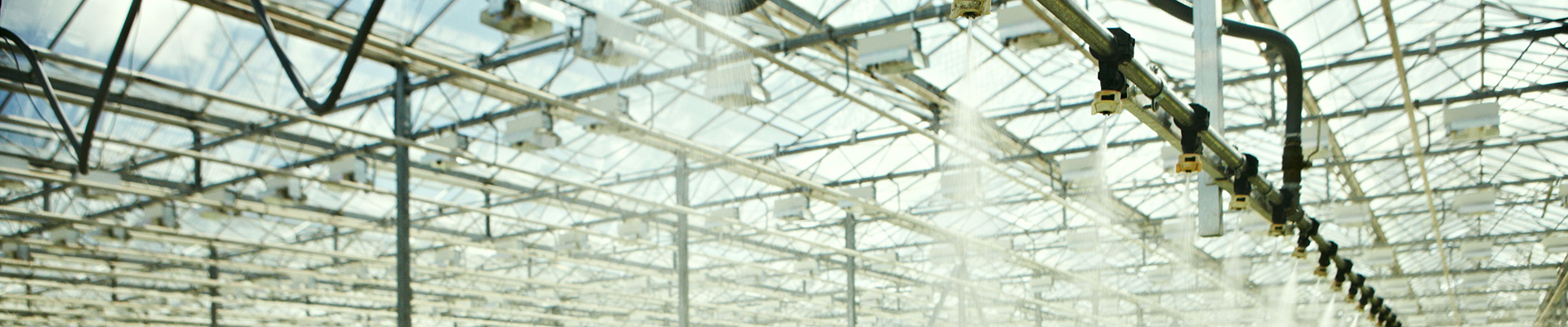


Selection of polycarbonate sheet materials for greenhouses
When selecting polycarbonate (PC) panels for greenhouses, it's crucial to consider light transmittance, heat insulation, durability, and cost-effectiveness, while also ensuring they can withstand the high humidity, high light intensity, and large temperature fluctuations characteristic of greenhouse environments. Below are key points, recommended types, and precautions for selecting PC panels specifically for greenhouse applications:
I. Advantages and Performance of PC Panels
High Light Transmittance: Meets the photosynthetic needs of plants (light transmittance ≥70%) while preventing scorching of crops by strong sunlight (shading nets can be used in summer).
Diffuse-reflective PC panels distribute light evenly, reducing crop shading, making them suitable for plants that prefer sunlight but are intolerant of direct sunlight (such as flowers and leafy vegetables).
Excellent Heat Insulation: Multi-layered hollow structures (such as double-layered or quadruple-layered panels) create an air insulation layer, reducing nighttime heat loss and lowering winter heating costs. In cold northern regions, 10-16mm thick quadruple-layered hollow panels are preferred, while in southern regions, 8-10mm thick double-layered panels can be used.
Anti-fogging and anti-condensation: High humidity in greenhouses easily leads to condensation. An anti-fogging coating (also known as a drip-proof layer) allows condensation to slide off the surface of the material, preventing it from dripping onto crops and causing disease. Anti-fogging performance must be effective long-term; the anti-fogging coating on high-quality materials can last 5-10 years.
Anti-aging and weather resistance: Outdoor UV coatings must withstand long-term ultraviolet radiation (≥10-year warranty), while indoor anti-fogging coatings must resist moisture and fertilizer corrosion. The temperature range must cover local extreme climates (e.g., -30℃ to 80℃) to prevent softening at high temperatures or cracking at low temperatures.
Structural strength and wind load resistance: For greenhouses with large spans (e.g., 8-12 meters), high-strength materials (e.g., reinforced three-layer structure) should be selected, or a steel frame should be used to enhance load-bearing capacity. Wind load resistance must meet local maximum wind speed requirements (e.g., coastal areas need to withstand winds of force 10 or higher).
II. Common Misconceptions
Misconception: Higher light transmittance is always better.
High light transmittance is suitable for scenarios requiring ample sunlight (such as greenhouses). However, in areas with strong direct sunlight, panels with diffuse reflection or low light transmittance (50%-60%) should be chosen to reduce glare and heat penetration.
Misconception: Thicker panels are always better.
Thickness needs to be considered in conjunction with load-bearing capacity and span design. For densely packed support structures, 6mm panels are sufficient; for large spans (such as roofs), panels of 10mm or more are required.
III. Installation and Maintenance Precautions
1. Installation Details
Panel Orientation: The hollow layer should be perpendicular to the greenhouse span direction to enhance longitudinal load-bearing capacity.
Expansion Space: Polycarbonate sheets have a large coefficient of thermal expansion and contraction. During installation, screw holes should be 2-3mm larger than the screw diameter to prevent cracking.
Sealing: Edges should be sealed with special aluminum profiles or sealing strips to prevent dust and rainwater from entering the hollow layer.
Drainage Design: The installation slope of the panels should be ≥5°, with drainage ditches at the bottom to prevent water accumulation.
2. Routine Maintenance Points
Cleaning Frequency: Clean at least 1-2 times per year with a soft cloth and neutral detergent. Do not use hard brushes or strong acids/alkalis.
Coating Inspection: Regularly check for wear on the UV layer and anti-fog layer. Replace the sheet immediately if coating failure is found.
Structural Inspection: Check the connection between the frame and the sheet quarterly for looseness. Strengthen inspections before and after typhoons and blizzards.
When purchasing polycarbonate sheets, prioritize material safety and performance matching the application scenario. Prioritize products made from brand-new PC raw materials with a uniform UV coating. Pay attention to details during installation to fully utilize their advantages in light transmission, impact resistance, and weather resistance, extending their service life.
